Last Updated: April 15, 2026
Getting your content cited by ChatGPT isn’t about gaming an algorithm—it’s about understanding how AI search systems retrieve, evaluate, and attribute sources. This technical guide walks you through the specific optimizations that increase your likelihood of citation in ChatGPT responses.
For the broader strategic context, see the generative engine optimisation hub.
What you’ll learn:
- How ChatGPT’s RRF (Reciprocal Rank Fusion) ranking works
- Content structure patterns that improve citation rates
- Technical implementation with code examples
- Testing and monitoring strategies
What Does “Getting Cited in ChatGPT” Actually Mean?
When ChatGPT provides answers in Browse mode or uses web search, it attributes information to specific sources with clickable citations. These citations appear as numbered references within the response, linking directly to your content.
A ChatGPT citation means:
ChatGPT retrieved a relevant passage from your content, determined it was authoritative enough to include in its synthesis, and explicitly credited your URL as the source. This differs fundamentally from traditional search rankings—you’re not competing for position #1, you’re competing to be one of 3-8 sources ChatGPT finds valuable enough to cite.
Why citations matter more than traditional metrics:
Unlike traditional search where users click one blue link, ChatGPT synthesizes information from multiple sources. A citation means your content informed the answer even if users never visit your site directly. This creates brand visibility, establishes topical authority, and signals that AI systems consider your content trustworthy.
[Source: Optimizing Web Content for LLM Citations: Insights from ChatGPT & Gemini Analysis, 2025]
How ChatGPT Decides What to Cite: The RRF Framework
ChatGPT doesn’t run a single search and pick the top result. It uses Reciprocal Rank Fusion (RRF)—a mathematical framework that combines results from multiple related queries into one final ranking.
The RRF Formula
RRF assigns a score to each result based on its position across multiple query variations:
RRF Score = 1 / (60 + rank position)Example calculation:
- Rank #1: 1/(60+1) = 0.0164
- Rank #5: 1/(60+5) = 0.0154
- Rank #10: 1/(60+10) = 0.0143
When your content appears across multiple related searches, ChatGPT adds up all your RRF scores. This explains why comprehensive topical coverage outperforms narrow keyword optimization.
Why Query Fan-Out Changes Everything
When you ask ChatGPT a question, it doesn’t just search for your exact words. It expands your query into 8-10+ related sub-queries, a process called Query Fan-Out. A page ranking #1 for just one query loses to a page ranking #4-6 across five queries.
Why Traditional SEO Tactics Fall Short for ChatGPT Citations
Traditional SEO optimizes for ranking a single page for a primary keyword. ChatGPT optimization requires a different approach. ChatGPT doesn’t read your entire page—it extracts relevant chunks—self-contained passages of 100-300 words—and evaluates each chunk independently.
Technical Prerequisites for ChatGPT Citations
Before optimizing content, ensure ChatGPT can access and understand your site.
1. Crawlability for AI User Agents
Check your robots.txt file doesn’t block AI crawlers. Ensure GPTBot, ChatGPT-User, and CCBot are all allowed.
2. Server-Side Rendering for Content
ChatGPT doesn’t execute complex JavaScript. If your content requires client-side rendering, AI systems may see an empty page. Use cURL with an AI bot user-agent to test what bots see.
3. Clean, Semantic HTML
ChatGPT parses semantic HTML to understand content structure. Use proper heading tags, not generic div elements.
Content Structure Optimization: Chunk-Level Design
ChatGPT retrieves and evaluates content in chunks—self-contained passages that can stand alone. Each section of your content should function as an independent, extractable answer.
The Anatomy of a Citable Chunk
A well-optimized chunk includes: a clear heading (H2 or H3) that signals the topic, a concise definition or answer (40-60 words) immediately following, supporting details with specifics (numbers, dates, examples), and no dependencies on other sections for context.
Next Steps: Building Your ChatGPT Citation Strategy
You now understand how ChatGPT’s RRF ranking works, how to structure content for chunk-level retrieval, and how to implement technical optimizations.
Immediate (This Week): Audit your robots.txt file, select your top 3 high-value pages for optimization, and test those pages in ChatGPT Browse mode for a baseline.
Short-term (Next Month): Implement chunk-level structure on selected pages, add FAQPage and Article schema markup, and build out internal linking between related pages.
Long-term (Next Quarter): Expand your content cluster, monitor citation patterns monthly, and scale optimizations to additional topic clusters.
Frequently Asked Questions
How long does it take to see ChatGPT citations?
Most sites see initial citations within 2-4 weeks after implementing chunk-level optimizations, assuming content is already indexed. Citation frequency increases over 3-6 months as topical authority builds.
Do I need high domain authority to get cited by ChatGPT?
No. While high-DA sites have an advantage, ChatGPT prioritizes content quality and topical coverage over domain metrics. A low-DA site with comprehensive, well-structured content can outcompete high-DA sites with shallow coverage.
Should I create one long page or multiple cluster pages?
If your total coverage is under 4,000 words, one comprehensive page works well. Beyond that, split into a topic cluster with a pillar page (overview) and 5-8 cluster pages (deep dives). Topic clusters provide better RRF scores because each page can rank for different query variations.
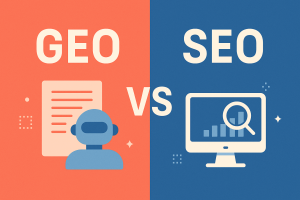
Can I optimize the same content for both traditional search and ChatGPT citations?
Yes. Chunk-level structure improves readability for humans, schema markup benefits traditional search, and comprehensive topic coverage boosts rankings. The main difference is ChatGPT requires more self-contained sections than traditional SEO.
About the Author
Gus van der Walt is a Senior SEO Manager with 15 years of experience specializing in technical SEO, AI-based search optimization, and Generative Engine Optimization (GEO). Based in Cape Town, South Africa, Gus helps businesses adapt their visibility strategies for the AI search era.

No comment yet, add your voice below!